


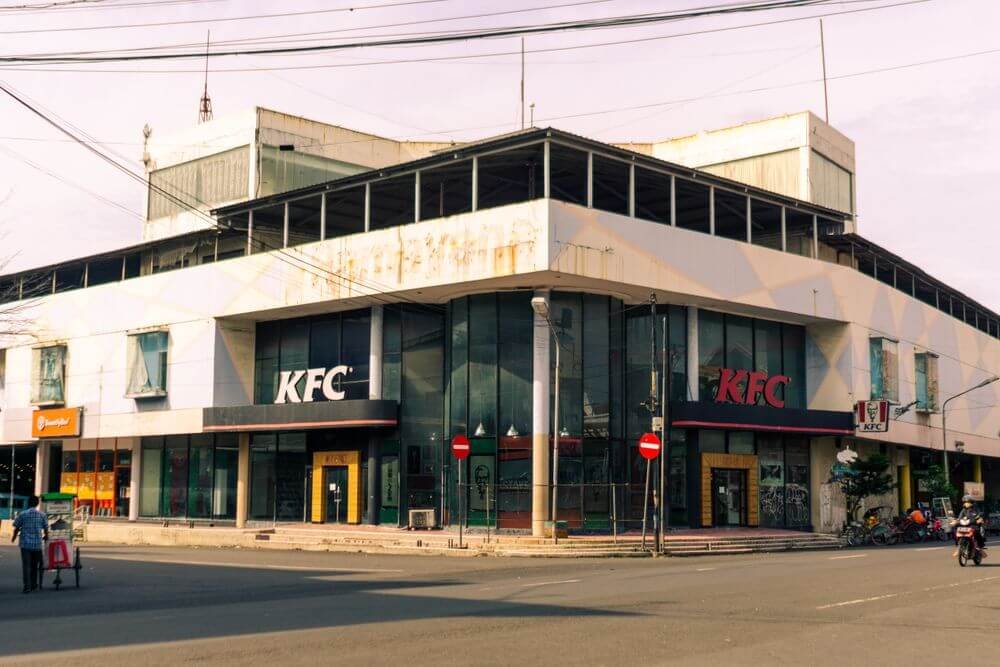
If your local KFC recently shut down, or you’ve seen headlines about mass closures, it’s easy to assume something serious is happening. The reality is more specific—and more useful to actually understand.
This article breaks down what’s really going on with KFC: which closures are real, why they’re happening, how the brand stacks up against competitors, and whether there’s any genuine risk of KFC disappearing.
KFC Is Not Going Out of Business—But It Does Have Real Problems
Let’s clear this up first. KFC is not shutting down. There is no bankruptcy filing, no announcement from Yum! Brands to wind down the chain, and no credible industry reporting that suggests KFC is collapsing as a global business.
KFC operates over 30,000 locations worldwide and carries a brand valuation of roughly $6.7 billion as of 2024, according to Statista data cited by The Daily Meal. It’s owned by Yum! Brands, which also runs Taco Bell and Pizza Hut, and collectively operates more than 50,000 restaurants globally.
The “going out of business” narrative is largely driven by real but localized events that get misread as a system-wide collapse. That’s a meaningful distinction—and it matters if you’re a customer, a franchisee, an investor, or just someone trying to figure out what’s actually happening.
The 2024 Midwest Closures That Started the Rumors
In mid-2024, around 25 KFC restaurants in Illinois, Indiana, and Wisconsin closed abruptly. That’s not a rumor—it happened. But the reason matters.
All 25 locations were owned by a single franchisee: EYM Chicken Operations, part of the EYM Group. KFC corporate confirmed the closures and specifically noted that all other KFC locations in those three states remained open. EYM Chicken only operated in those three states, so the closures were geographically contained from the start.
Reports from Restaurant Business Online and Nation’s Restaurant News confirmed that the closed stores were expected to remain shut until new owners were found—not permanent brand exits from those markets.
EYM Group had also faced financial difficulties across other brands it operated, which points clearly to an operator-level failure, not a KFC corporate problem.
Think of it like this: if one hotel investor owns 25 Marriott properties, runs them poorly, and goes bankrupt, those hotels may close. But that doesn’t mean Marriott as a brand is in trouble. It means one investor’s portfolio failed. That’s exactly what happened here with EYM and KFC.
Why KFC’s Franchise Model Makes This Confusing
About 98% of KFC’s roughly 3,600 U.S. locations are franchise-owned. That means independent operators—not KFC corporate—run the day-to-day business, pay the leases, hire the staff, and manage their own debt.
When a franchisee over-expands, takes on too much debt, or can’t make the unit economics work in their market, they can close stores or go bankrupt. This happens while the broader brand continues operating normally everywhere else.
This isn’t a flaw in the system—it’s how fast-food chains scale to tens of thousands of locations. But it does create confusion when closures happen. Someone driving past a boarded-up KFC in their town sees a closed restaurant. They don’t see the 30,000 other locations still running.
Readers who see a local KFC close are almost always watching a local business decision, not a corporate retreat from the market.
Where KFC Is Genuinely Struggling
That said, KFC does have real, documented challenges—especially in the United States.
Analysis and industry commentary suggest KFC’s U.S. sales have fallen to levels not seen since roughly 2004, and revenue per store is lower than competitors like Chick-fil-A and Popeyes. One reported earnings period showed KFC U.S. same-store sales dropped around 7%. Those are meaningful numbers.
Menu prices have also risen sharply. The Daily Meal reports that KFC prices have increased 30–40% in recent years, with simple meals approaching $15 before tax at some locations. For a chain that built its reputation on affordable family meals, that’s a significant shift. Price-sensitive customers have noticed—and some have left.
Beyond pricing, KFC faces a brand identity problem in a crowded market. Popeyes built massive buzz around its chicken sandwich. Wingstop has carved out a strong niche with wings. Chick-fil-A consistently leads in customer satisfaction scores and average unit volumes. KFC, by comparison, feels less defined to many consumers right now.
Some customers also report declining food quality and inconsistent execution across locations—problems that spread quickly through social media reviews and can accelerate sales decline in specific markets.
International Pressures: Boycotts and Franchise Bankruptcies Abroad
The U.S. isn’t the only market where KFC has faced headwinds.
In Malaysia, a widespread consumer boycott began in October 2023 over KFC’s perceived ties to U.S. corporate interests amid the Israel-Gaza conflict. By May 2024, more than 100 KFC outlets had closed in the country within a six-month span, according to The Daily Meal. For people in Malaysia, it looked like KFC was collapsing. In the rest of the world, the chain kept operating as normal.
In Turkey, KFC’s franchise operator—IS Gıda—filed for bankruptcy in early 2025, putting hundreds of stores and thousands of jobs at risk. Again, this is a regional franchise operator failure, not a global brand failure.
These events are real and significant within their local contexts. But they follow the same pattern: operator-level or market-level problems that don’t reflect what’s happening with KFC globally.
The Headquarters Move: What It Actually Signals
In February 2025, KFC announced it would relocate its headquarters from Louisville, Kentucky to Texas, where Pizza Hut—another Yum! Brands chain—is already based.
Some interpreted this as KFC abandoning its roots or signaling deeper trouble. A more straightforward reading: it’s a cost-reduction and operational consolidation move. Centralizing two Yum! Brands under the same roof in Texas cuts overhead and simplifies management structure.
This is similar to a tech company moving from San Francisco to Austin. It signals a desire to reduce costs and reorganize—not a company preparing to shut down.
The Global Picture vs. the U.S. Picture
One important distinction gets lost in most “KFC is struggling” coverage: the U.S. market and the global market are telling very different stories.
KFC has historically been a dominant Western fast-food brand in Asia, Africa, and other emerging markets. While the U.S. operation faces competitive pressure, aging store infrastructure, and franchise stress, international markets have continued to drive unit count growth and brand value.
The honest summary is this: KFC has real problems in mature markets like the U.S., and specific operators in places like Malaysia and Turkey have faced severe disruptions. But the global system—backed by Yum! Brands—remains large, financially active, and not on a path toward closure.
For entrepreneurs and business owners thinking about franchise investment or competitive analysis, resources like Small Business Byte offer useful context on evaluating franchise opportunities and understanding brand health beyond the headlines.
What This Means If You’re a Franchisee or Investor
If you’re considering a KFC franchise or evaluating Yum! Brands as an investment, the data points to a specific set of risks—not a collapsing brand.
The U.S. market is competitive and margins are under pressure. Site selection and operator quality matter enormously. The EYM Group situation is a clear example of what happens when a franchisee over-expands without the financial foundation to absorb market headwinds.
From an investment standpoint, KFC is one of three major brands under Yum! Brands. Taco Bell in particular has been a strong performer and helps balance KFC’s weaker U.S. results. That diversification matters when reading Yum! earnings and stock performance.
The Bottom Line
KFC is not going out of business. But it’s also not thriving in every market, and the challenges it faces in the U.S. are real—rising prices, stronger competition, franchise stress, and a less distinct brand identity than it had a decade ago.
The closures you’ve seen are mostly the result of specific franchisees failing, not the corporate brand retreating. The international disruptions in Malaysia and Turkey are market-specific. The headquarters move is a cost decision, not a distress signal.
What KFC does face is a genuine need to compete more effectively in markets where Chick-fil-A, Popeyes, and Wingstop have taken meaningful ground. That’s a strategic problem worth watching—just not the same thing as going out of business.
When you see dramatic headlines about a brand “collapsing,” it’s worth asking: is this the whole company, or one part of it? With KFC, almost every major closure story so far has had a clear, localized answer.
Read More:
